

Are Cockroaches Dangerous? Allergies, Asthma and Real Health Risks
Are cockroaches really dangerous? WHO and AIIMS evidence on asthma, allergens, and bacterial transmission in Indian homes. What actually works.
Spotting a cockroach in the kitchen at 2 AM is a near-universal Indian experience. Most of the time we treat it as a nuisance. But a growing body of research — including major Indian studies — shows that cockroaches are a measurable, India-specific public health risk.
Not in a panic-inducing way. In a “you should know this if someone in your house has asthma” way.
This is the evidence-based picture. What the risks actually are, who’s most affected, and what genuinely works to reduce them.
First, Some Definitions
- Allergen: A protein that triggers an immune response in some people, even though it’s harmless on its own.
- Sensitisation: When the immune system mistakenly identifies an allergen as a threat and starts producing antibodies against it.
- IgE (Immunoglobulin E): The specific antibody class involved in allergic reactions. When IgE-bound immune cells encounter the allergen again, they release histamine — which causes airway inflammation, wheezing, and asthma.
- Vector: An organism that physically transports pathogens between hosts.
How Cockroaches Make Us Sick
Two distinct biological pathways. Both matter, but for different reasons.
1. Mechanical pathogen transfer. Cockroaches walk through sewage, garbage bins, and drains, picking up bacteria on their legs, exoskeleton, and inside their gut. They then walk across your kitchen counter, your food, your cooking utensils. Pathogens transfer in three ways:
- Externally — bacteria stuck to their legs and shell get tracked onto surfaces.
- Through faeces — pathogens survive in the gut and are excreted continuously.
- Through regurgitation — cockroaches frequently vomit onto food as part of their feeding cycle.
2. Allergen exposure. Cockroaches produce potent proteins in their faeces, saliva, and shed exoskeletons. These particles settle into household dust. When dust is disturbed — sweeping, bedmaking, vacuuming — humans inhale them. Over time, this can trigger asthma in susceptible people.
The relative importance: pathogen transfer drives acute illness (food poisoning, gastroenteritis), while allergen exposure drives chronic, long-term respiratory morbidity. For most urban households, the chronic exposure is the bigger ongoing problem — and the more under-recognised one.
The Allergen and Asthma Connection

Specific proteins drive these reactions. The German cockroach (Blattella germanica) produces Bla g 1 and Bla g 2 — concentrated in its digestive tract and faeces. The American cockroach (Periplaneta americana) produces Per a 7, a muscle protein released when dead cockroaches decay.
If you want to know which species you’re dealing with, our field guide to cockroach species in Indian homes covers the four most common.
Children in dense urban housing are the highest-risk group. This isn’t a hypothesis — it’s been measured directly. The landmark National Cooperative Inner-City Asthma Study (NCICAS) in the US found:
- 85.3% of inner-city children’s bedrooms had detectable Bla g 1 allergen.
- Over 50% of those bedrooms had levels above the high-risk threshold for sensitised children.
- Children who were both sensitised and exposed to high allergen levels suffered significantly worse asthma — more hospitalisations, more missed school days, more disrupted sleep.
The India-specific evidence is striking. A paediatric study at the All India Institute of Medical Sciences (AIIMS) Raipur tested children suffering from asthma and allergic rhinitis. The findings:
- 80% of the children were sensitised to at least one environmental allergen.
- Cockroach mix was the single most common trigger, affecting ~59% of the children studied.
- There was a strong statistical correlation between cockroach sensitisation and increased asthma severity.
In short: in Indian paediatric asthma clinics, cockroach allergens are at or near the top of the trigger list. This is not a footnote.
Disease Vectors and Bacteria
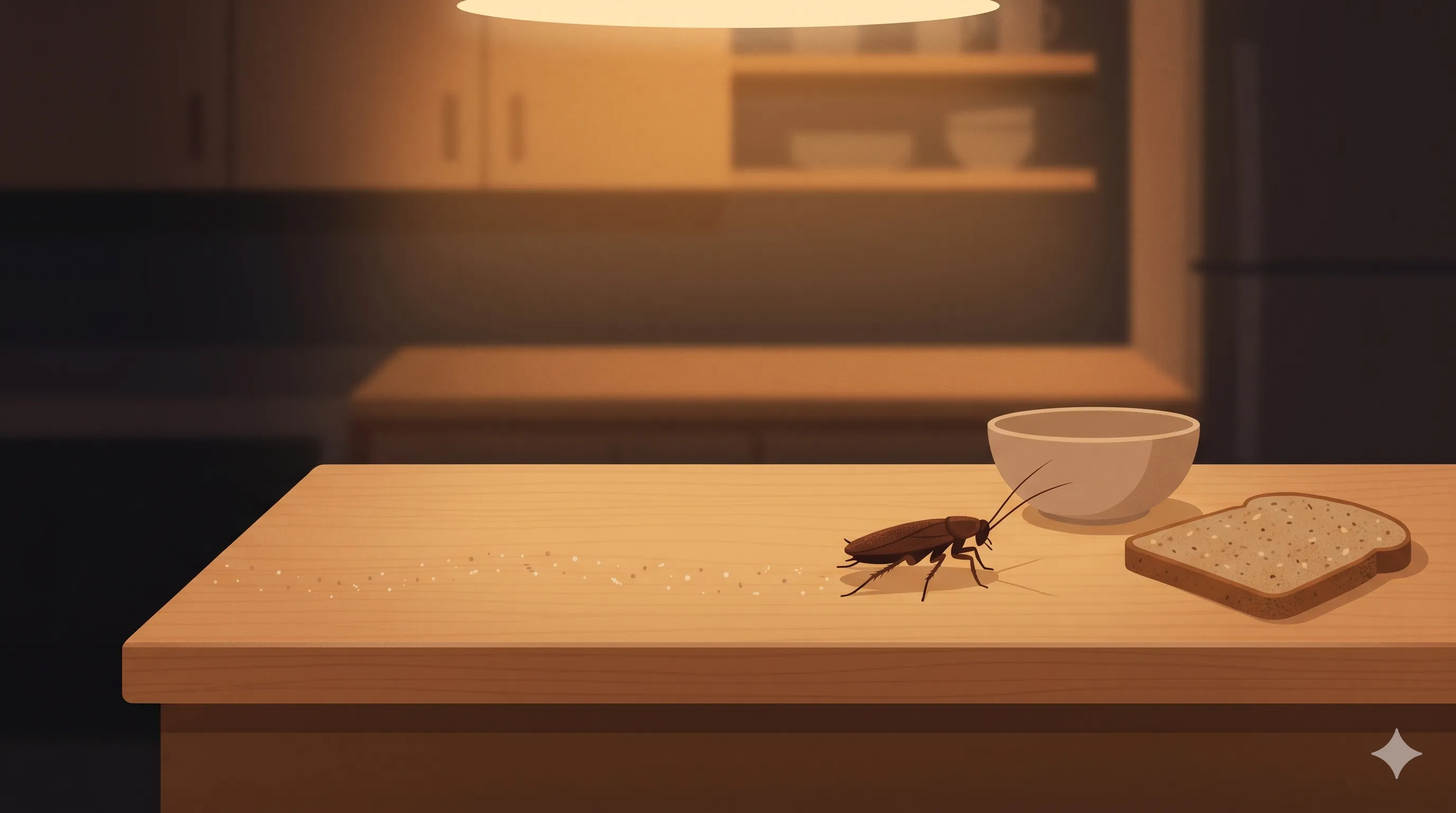
Hospital surveys and academic studies have consistently isolated the following pathogens from cockroach bodies and gut contents:
- Salmonella enterica and Shigella dysenteriae
- Staphylococcus aureus, including antibiotic-resistant MRSA strains
- Escherichia coli (E. coli)
- Streptococcus and Pseudomonas aeruginosa
The diseases these can cause include gastroenteritis, severe diarrhoea, dysentery, typhoid fever, urinary tract infections, and — in hospital settings — opportunistic sepsis in immunocompromised patients.
Are cockroaches actually causing transmission, or just associated with poor sanitation? A fair sceptical question. The evidence says cockroaches are an active driver, not a passive indicator:
- In controlled laboratory experiments, cockroaches exposed to Salmonella successfully cross-contaminated clean food, water, and uninfected cockroaches within 24 hours.
- The historical example: a 1950s Hepatitis A outbreak in a Los Angeles housing project was extinguished by targeted cockroach extermination in the affected complex — while cases continued to rise in surrounding untreated neighbourhoods.
Cockroaches don’t just live where bad sanitation lives. They actively spread what they pick up.
Why Indian Homes Are Particularly Vulnerable
Four structural factors stack against the average Indian urban resident:
1. Climate. India sits in the cockroach thermal sweet spot for at least eight months a year. The monsoon (June–September) drives the worst spikes — high humidity triggers explosive breeding, and heavy rains push large sewer-dwelling cockroaches indoors as drains flood.
2. Apartment density. Mumbai, Delhi, Bengaluru, Chennai — multi-unit buildings with shared plumbing pipe chases, electrical conduits, and wall voids let cockroaches migrate freely between flats. Your neighbour’s untreated infestation becomes your indoor air problem.
3. Storage culture. Bulk grains, lentils, flour, and spices — combined with warm kitchens — provide a year-round food supply if containers aren’t airtight.
4. Diagnostic stigma. This one is under-discussed. Indian families often don’t mention pest infestations to doctors, because pest problems carry social stigma. As a result, paediatricians treat asthma symptoms generically, without testing for or addressing cockroach allergen sensitisation. The trigger remains invisible. Treatment plateaus.
Who Is Most at Risk
Anyone can pick up food poisoning. But for cockroach allergens specifically, the high-risk groups are:
- Children with developing immune systems or pre-existing asthma — especially those who play on the floor, where settled dust is densest.
- The elderly and immunocompromised — susceptible to opportunistic bacterial and fungal infections including MRSA and Aspergillus.
- Pregnant women and infants — emerging research suggests that high prenatal and early-infancy exposure may prime the immune system to develop persistent wheezing and allergies later in childhood.
What Actually Reduces Risk
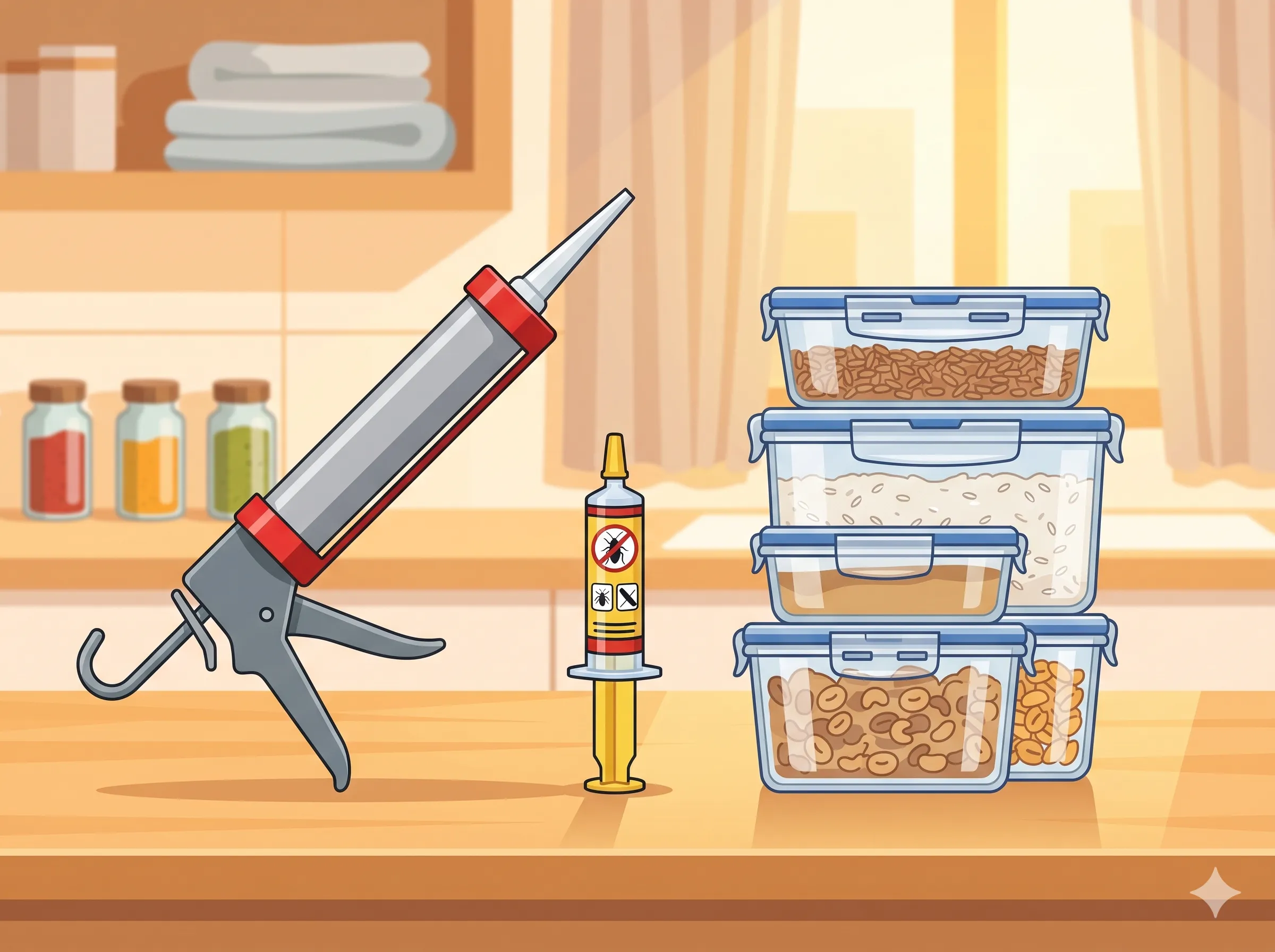
The evidence-based framework is Integrated Pest Management (IPM) — eliminating root causes, not just spraying chemicals. Ranked by impact:
1. Cut off water. Cockroaches survive weeks without food but only days without water. Fix leaky taps. Dry the kitchen sink at night. Don’t leave water sitting in bathroom buckets overnight. This is the single highest-leverage intervention.
2. Seal entry points. Silicone caulk, expandable foam, or copper mesh to permanently seal cracks in walls, gaps under doors, and especially the spaces where plumbing pipes enter the walls. This is the only way to stop migration from neighbours’ flats.
3. Use gel baits, not sprays. Modern gel baits contain fipronil or indoxacarb. Apply pea-sized dabs in corners, cabinet hinges, and under sinks — the places cockroaches actually live. They eat the bait, return to the nest, and die — creating a secondary kill effect that takes out the hidden colony.
4. Treat the building, not just the flat. German cockroach infestations especially: coordinate with neighbours and the housing society. Building-wide IPM is significantly more effective than flat-by-flat treatment, both for elimination and for preventing migration.
Does this actually work? Yes — and the evidence is direct. The Inner-City Asthma Study (ICAS) intervention combined professional cleaning, gel baits, and HEPA filters in homes of asthmatic children. The results:
- Significant reductions in measured cockroach allergen levels in household dust.
- Sustained, measurable improvements in the children’s asthma — fewer missed school days, fewer sleep-disrupting attacks, fewer unscheduled doctor visits.
Cockroach abatement is not just hygiene. For paediatric asthma in dense urban housing, it is a clinical intervention with measurable outcomes.
What Does NOT Work
A short list, mostly to save you money:
- Aerosol “bug bombs” / total release foggers. The aerosol particles don’t penetrate the cracks where cockroaches actually hide. They coat your counters and floors in toxic residue. And modern German cockroaches have extensive genetic resistance to the pyrethroid chemicals used in foggers anyway.
- Single-flat sprays in a multi-unit building. Forces cockroaches to temporarily migrate to neighbours’ flats, then return weeks later when the chemicals wear off.
- Ultrasonic repellers, chalk lines, “natural” repellents sold in markets. No robust scientific evidence supports any of these.
Rely on physical exclusion and targeted baiting. That’s what works.
Key Takeaways
- Two risk pathways: mechanical pathogen transfer (acute illness) and allergen exposure (chronic asthma/respiratory). Both real, both well-documented.
- The allergen-asthma link is well-evidenced in India. AIIMS Raipur found ~59% of asthma-affected children are sensitised to cockroach allergens — the most common single trigger.
- Cockroaches actively transmit pathogens, including MRSA, Salmonella, Shigella, and E. coli. They are not just passive indicators of poor sanitation.
- Indian urban housing is uniquely vulnerable — climate, monsoon, shared plumbing, kitchen culture, and diagnostic stigma all stack against the resident.
- What works: moisture control, entry-point sealing, gel baits, building-level coordination. This is IPM.
- What doesn’t: foggers, single-flat sprays, ultrasonic gadgets. Don’t waste money.
If a child in your home has unexplained or persistently severe asthma — especially in a multi-unit apartment building — ask your paediatrician about cockroach allergen testing. The trigger might not be invisible after all.
Sources: WHO — Cockroaches: their biology, distribution and control · PMC — Cockroach allergens and asthma · Inner-City Asthma Study (NCICAS) — NEJM 1997 · NEJM 2017 — Reducing cockroach allergens reduces asthma morbidity · AAAAI — Cockroach allergy fact sheet
Related posts: Types of Cockroaches in Indian Homes · How Cockroaches Survived 300+ Million Years · The Chronicles — Episode 1: The Great Kitchen Cleanse