
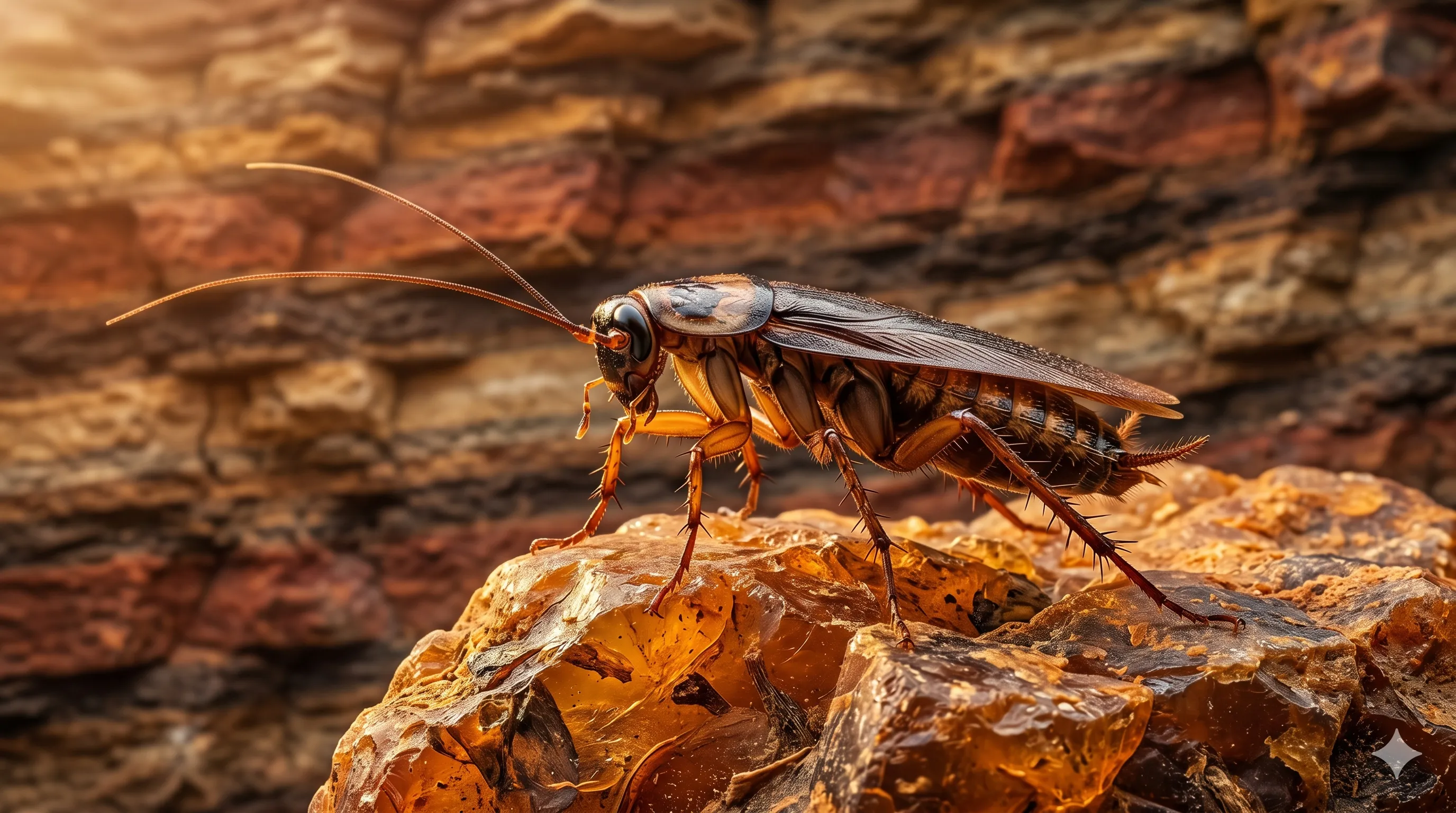
How Cockroaches Survived 300+ Million Years: The Science of Extreme Resilience
Cockroaches predate dinosaurs by 80M years. The science behind the world's most resilient survivor — and what it means for modern science.
If you’ve ever flicked on the kitchen light at 2 AM and watched a cockroach casually scurry away, you’ve probably wondered how these creatures seem practically invincible. The truth is, that roach in your home is the product of more than three hundred million years of evolutionary engineering.
This is the survival story — and it is stranger, and more precise, than the popular telling.
Ancient by Design: A 320-Million-Year Timeline
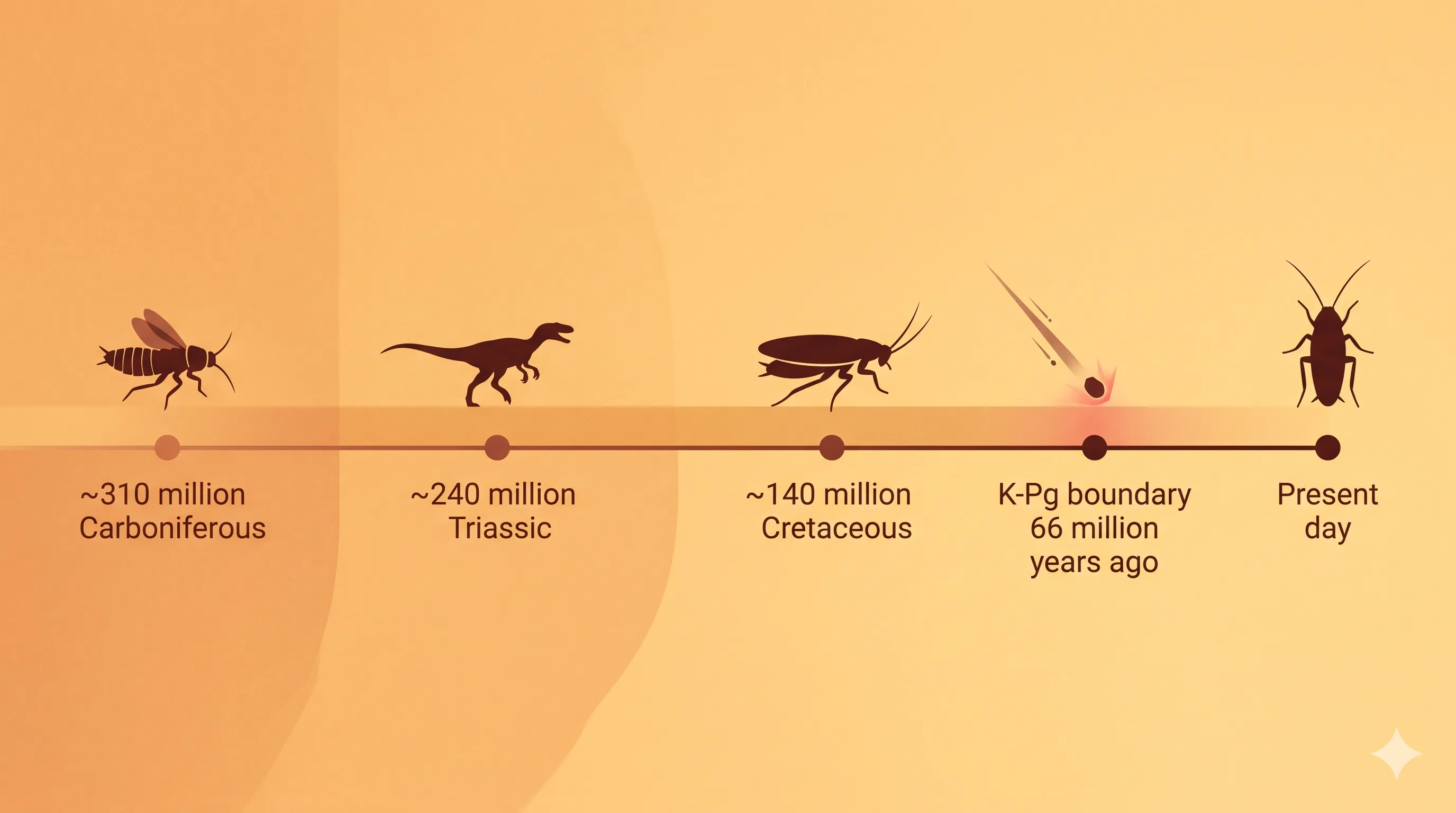
The cockroach in your kitchen is running on hardware that predates the dinosaurs by roughly 70 million years.
Cockroach ancestors — known as roachoids, technically classified as stem-Dictyoptera (the early evolutionary branch, not the modern lineage itself) — first appear in the fossil record around 310 million years ago, during the Carboniferous period. The best-studied specimen is Archimylacris eggintoni, dated by Garwood and Sutton (2010) in Biology Letters to the Duckmantian Coal Measures of England, at ~311 million years ago. These weren’t the sleek runners we know today — they were bulkier, with long external egg-laying structures. The design was still iterating.
The modern cockroach body plan — the crown Blattodea group we’d recognise today — is much younger. A phylogenomic study by Evangelista et al. (2019) in Proceedings of the Royal Society B places the molecular origin of crown Blattodea around 205 million years ago. The earliest crown fossils appear around 140 million years ago, deep in the Cretaceous — by which point dinosaurs had been around for nearly a hundred million years.
Cockroaches outlived them. The same phylogenomic data shows cockroach lineages crossing the K-Pg mass extinction (66 Mya) without a detectable bottleneck. The asteroid that ended the dinosaurs barely registered on their family tree.
One curious side note from the same study: termites are taxonomically cockroaches. They sit nested inside the cockroach phylogeny (a clade now formally named Tutricablattae) — termites are essentially cockroaches that learned to live in eusocial colonies. Three hundred million years of iteration, plus one branch that figured out architecture.
Built Different: The Anatomy of Survival
The cockroach’s durability is not luck. Every system in its body is optimised for staying alive in hostile conditions. Five of them are worth looking at closely.
Breathing through spiracles, not lungs
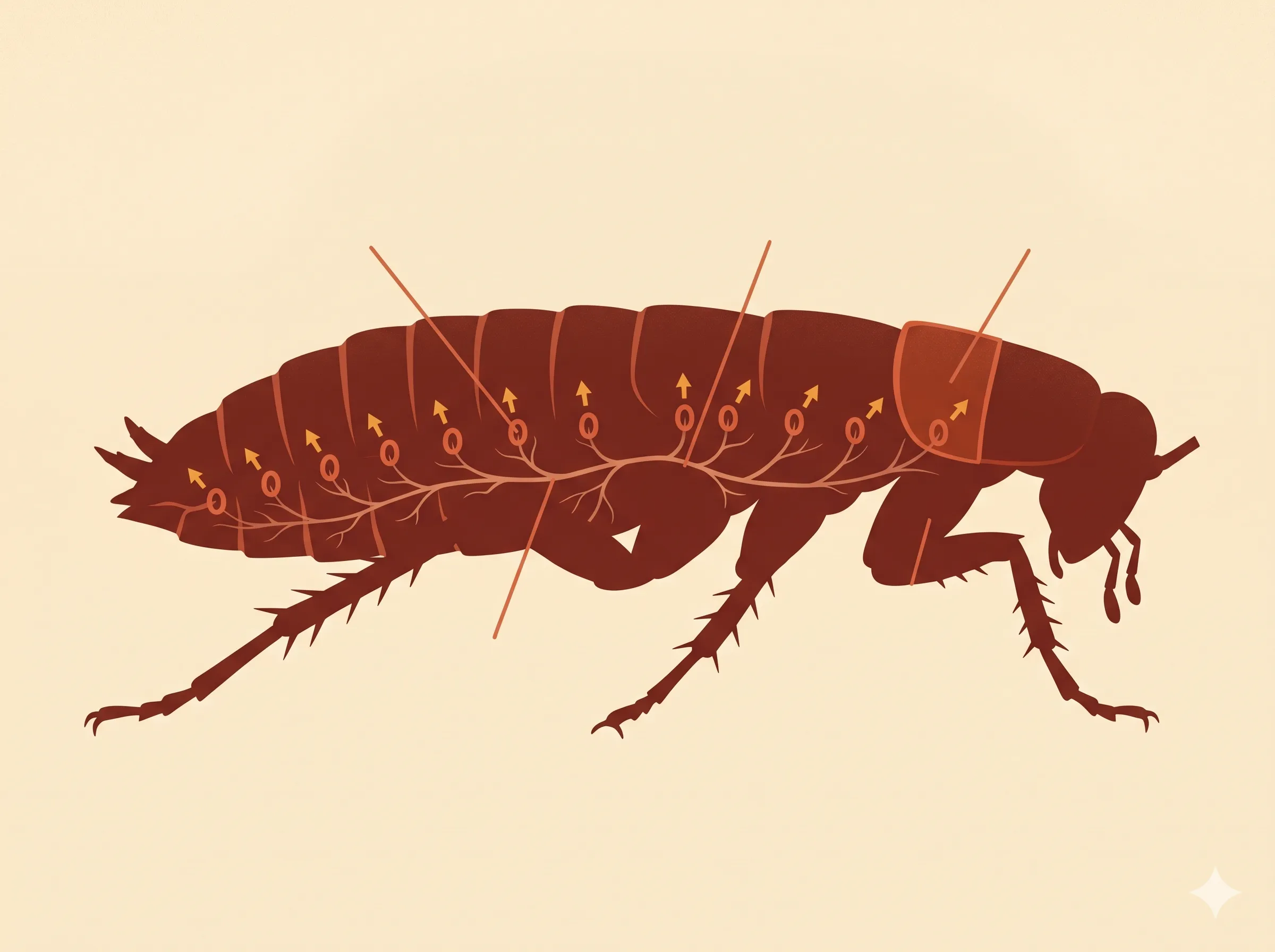
Cockroaches have no lungs and do not breathe through their mouths. They breathe through spiracles — tiny portholes along the sides of their body, one per segment, each opening into a branching network of tracheal tubes that pipe oxygen directly into the surrounding tissue. Each segment handles its own gas exchange independently. There is no central breathing apparatus to compromise. Damage one section, the rest oxygenate fine.
Intelligence in the limbs
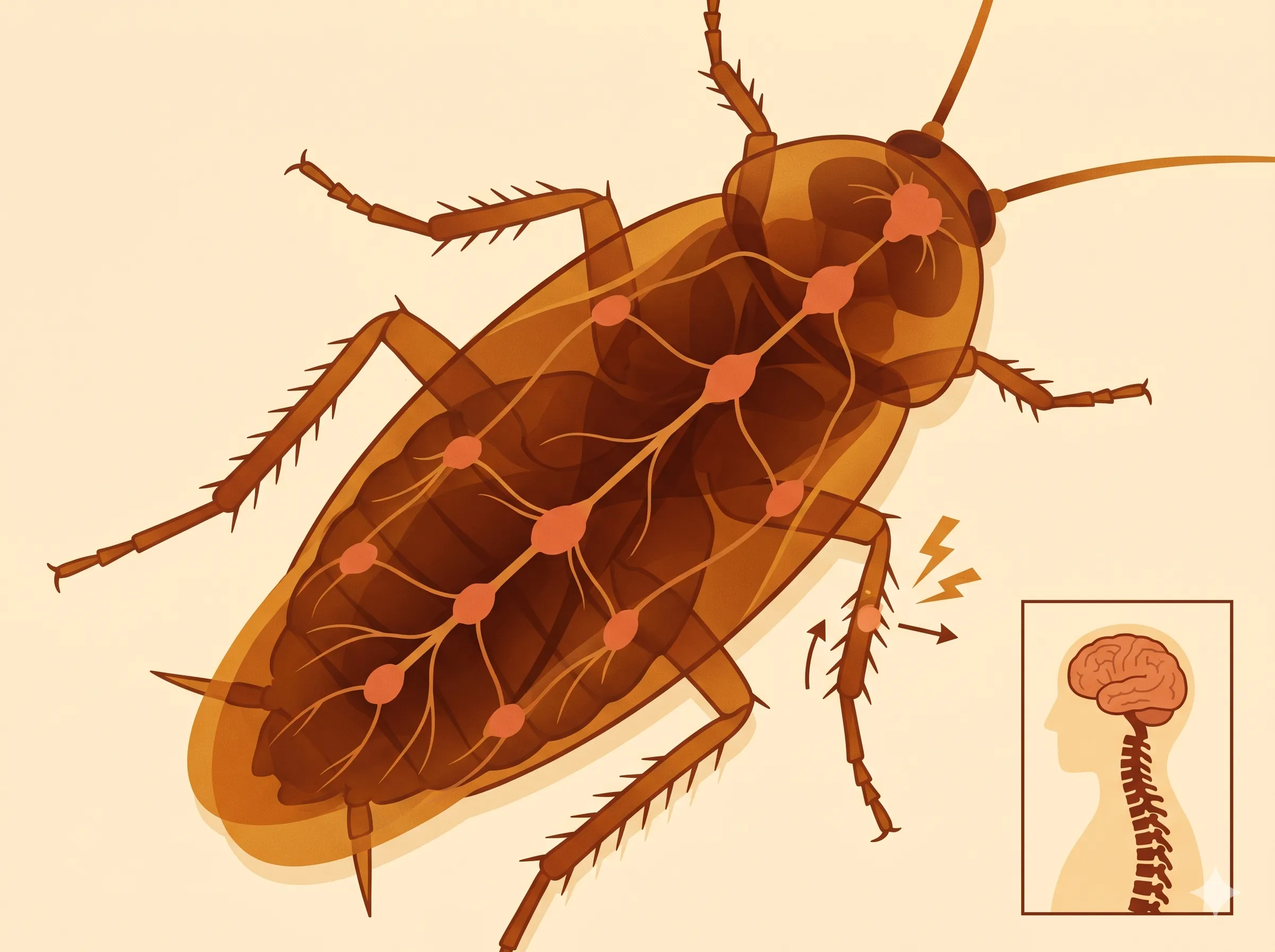
Their nervous system is decentralised. Nerve clusters called ganglia are distributed throughout the body rather than concentrated in a single brain — typically one ganglion per body segment, connected by a thin ventral nerve cord. When you swipe at a cockroach, its legs react before any signal reaches its head. The escape is being computed locally, in the limb’s own ganglion, in milliseconds. Compare a human spine, which routes everything through a single central nervous system. The cockroach is, essentially, several brains in parallel.
A month without food
Cockroaches carry a 150-million-year-old symbiotic bacterium called Blattabacterium cuenoti, housed inside specialised fat-body cells. Blattabacterium recycles waste nitrogen (uric acid) back into essential amino acids — letting cockroaches extract nutrition from food that would otherwise be marginal, and survive long famines on stored reserves. It’s not just a survival trick. It’s a chemical recycling plant running inside them.
(Hold on to this bacterium. It’s coming back later in this article in a way you might not expect.)
Weeks without a head
This sounds like myth. It’s biology.
Because cockroaches breathe through spiracles (not a mouth) and have a low-pressure circulatory system that clots quickly, a decapitated cockroach does not bleed out or suffocate. It eventually dies — but not from the decapitation itself. It dies from dehydration, weeks later, because it cannot drink water without a head.
Compression that engineers cannot replicate
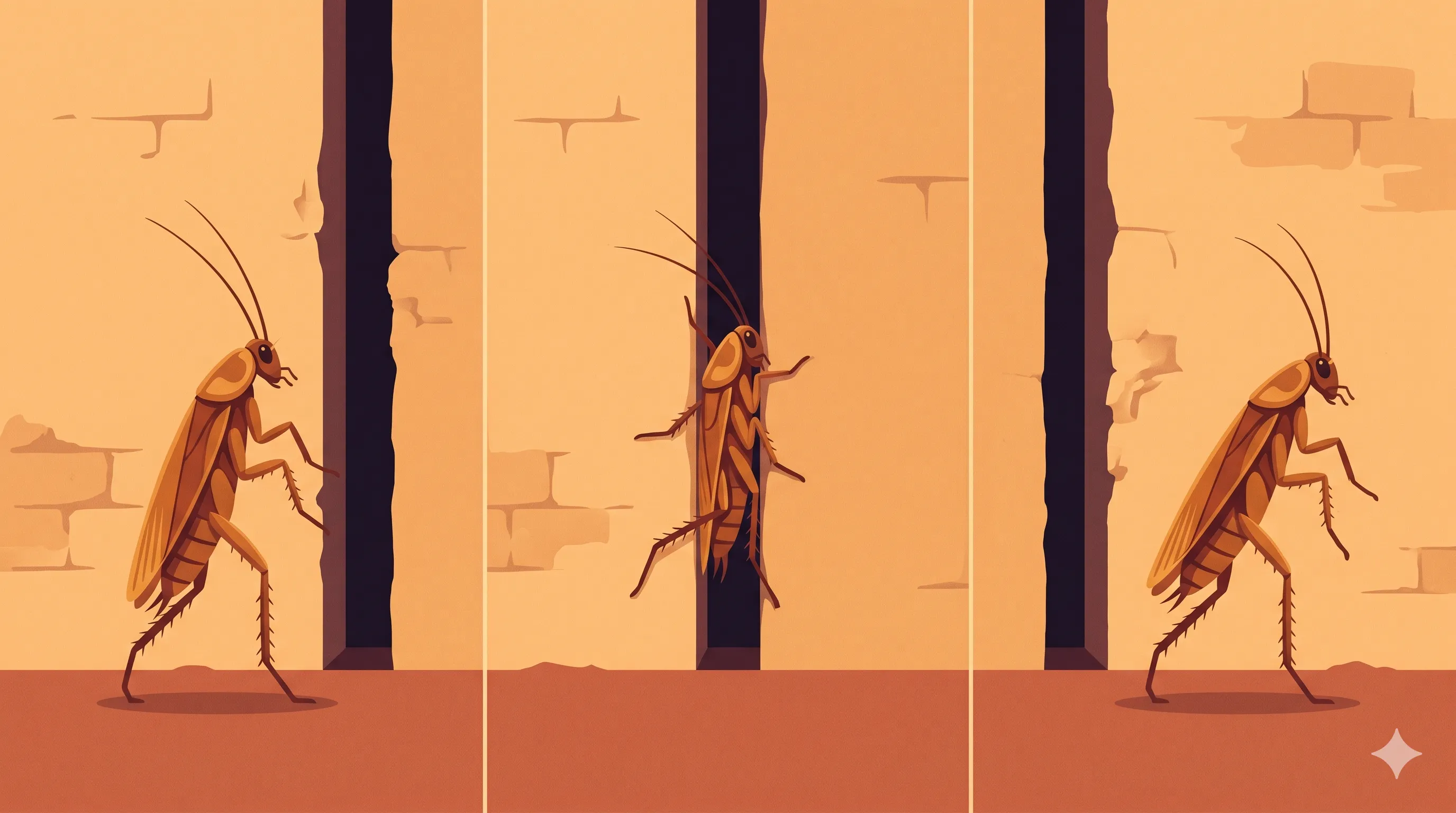
Their exoskeleton compresses dramatically — letting them squeeze through gaps far smaller than they appear.
The classic UC Berkeley study by Jayaram and Full (2016) in PNAS measured this with precision: cockroaches compress their bodies to 40–60% of normal height (averaging about 47%) to traverse a 3-millimetre crevice. While they’re squeezed, they experience compressive forces of around 300 times their own body weight. In dynamic lab tests pushing further, they tolerated up to ~900 times their body weight without sustaining any injury. After emerging, they resumed running at full speed — 77 cm/s, statistically indistinguishable from controls.
Engineers have not yet built a robot that can do this reliably. We’ll come back to the closest attempt later.
Radiation tolerance — with a popular myth corrected
Now for the cockroach fact everyone “knows” — and gets slightly wrong.
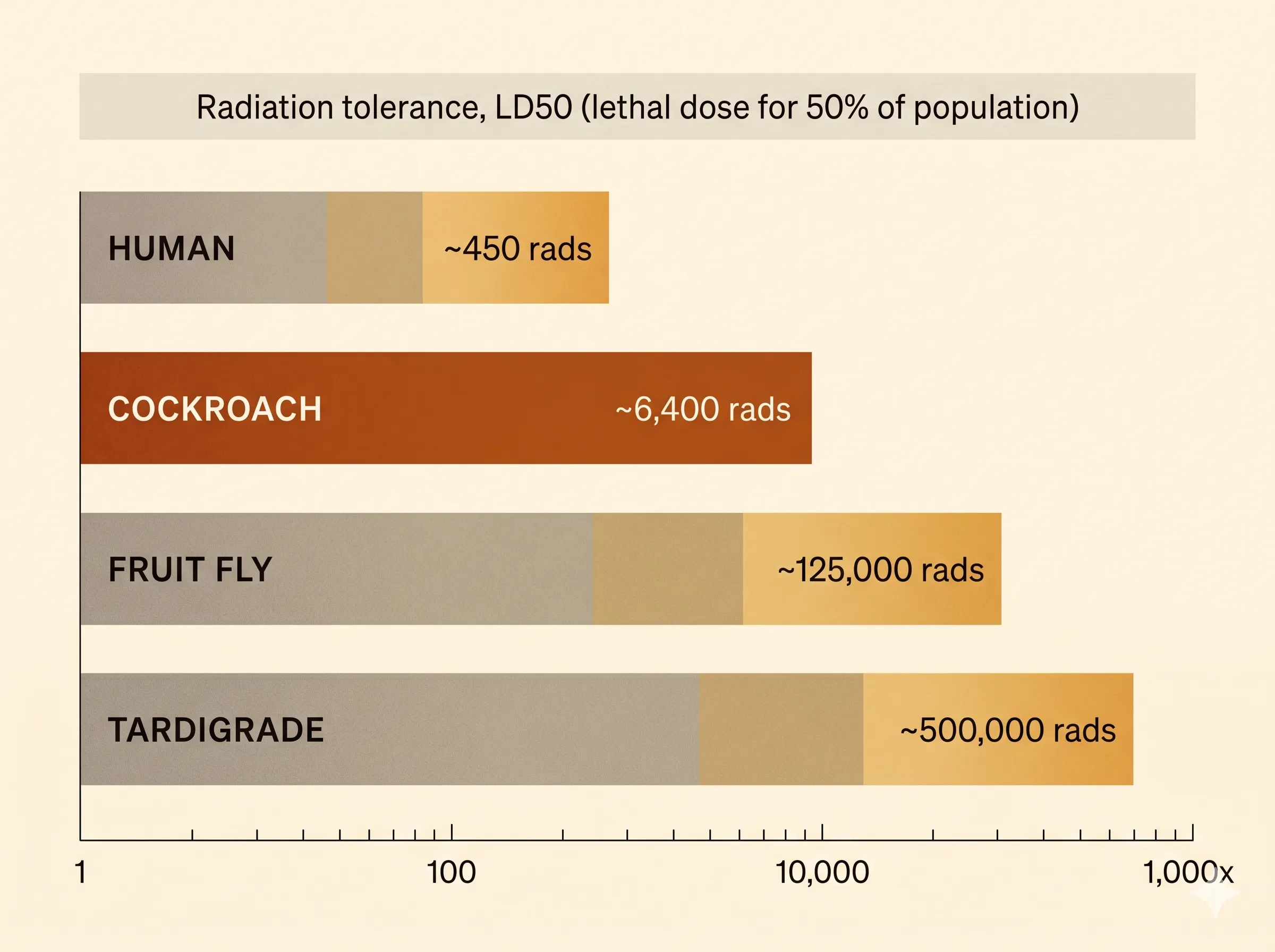
The widely-repeated claim that cockroaches survive 10,000 rads of radiation isn’t from a primary source. It’s folklore. The peer-reviewed LD50 (the lethal dose for half the population) for adult cockroaches is closer to 6,400 rads — see Wharton and Wharton (1959) for American cockroaches, and Ross and Cochran (1963) for German. That’s still roughly 14 times the human lethal dose of ~450 rads. Impressive — just not the thousand-fold survival of popular imagination.
And cockroaches aren’t even the radiation champions among insects. Fruit flies tolerate around 125,000 rads. Tardigrades — the real outlier of the animal kingdom — clear 500,000 rads, roughly 1,100× the human lethal dose.
So why do cockroaches survive radiation at all? The mechanism, per Kelleher et al. (2025) in Journal of Heredity, is mostly passive. Radiation kills cells primarily during mitosis — DNA breaks become lethal when a cell tries to copy a broken genome. Adult cockroaches are largely post-mitotic: most of their cells aren’t actively dividing at any given moment. Cell division concentrates around moulting. Outside that narrow window, the genome is essentially in storage. The radiation passes through, and there’s nothing actively replicating to break.
Tardigrades survive radiation differently — actively, through molecular machinery. The Dsup protein physically shields chromatin from damage. TRID1 accelerates DNA repair through phase separation. Cockroaches have none of that.
Cockroaches survive radiation by avoiding the damage window. Tardigrades survive by repairing the damage.
The “German” Cockroach’s Asian Origin
Here is something that surprises most people: the German cockroach is not German.
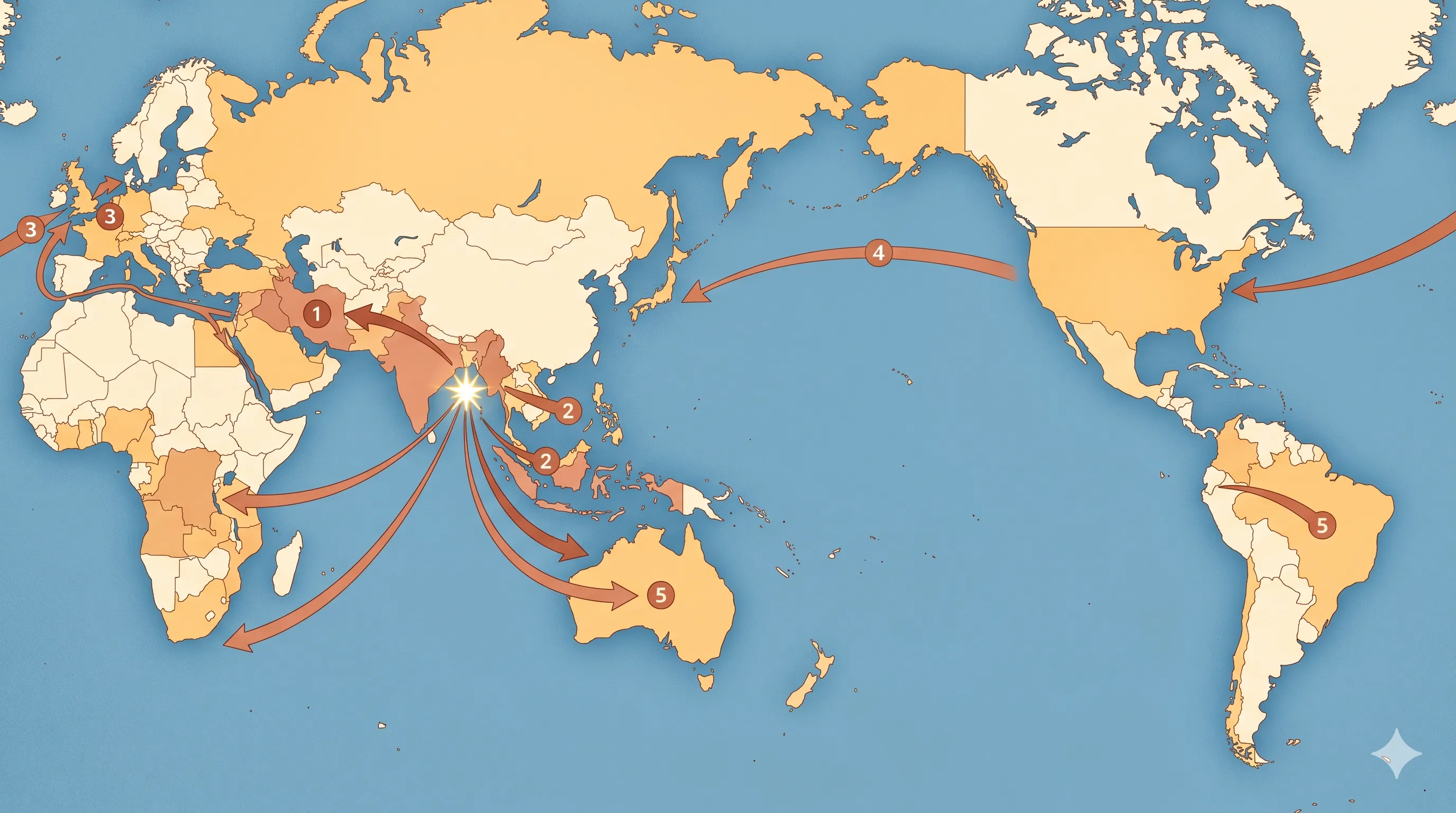
A 2024 study by Tang et al. in PNAS — using 158,216 genome-wide markers from 281 cockroach specimens collected across 17 countries — finally settled a 250-year-old mystery about where this species actually came from. The answer is the Bay of Bengal — specifically, eastern India or Myanmar.
Approximately 2,100 years ago, as humans cleared forest for agriculture in the region, Blattella germanica diverged from its parent species Blattella asahinai (the Asian cockroach). At the same time, it became uniquely synanthropic — a fact worth pausing on. B. germanica has never been found outside human structures anywhere on Earth. No wild population exists. It evolved entirely inside our buildings, for our buildings. It is the only cockroach species we know of with no natural habitat.
From the Bay of Bengal, the paper maps five distinct migration waves — each driven by a different empire’s logistics:
- ~1,200 years ago — westward into the Middle East, carried along the commercial and military networks of the Islamic Umayyad and Abbasid Caliphates.
- ~390 years ago — eastward into Southeast Asia, possibly via the Dutch and British East India Companies’ regional trade (the paper hedges here — the genomic timing is precise, the historical attribution is inferred).
- ~270 years ago — into Europe via steam-era shipping, just before Carl Linnaeus named the species Blattella germanica in 1776. He chose Germany because by then it felt native there.
- Late 19th to early 20th century — across the Atlantic to the Americas, riding global steam trade, indoor plumbing, and central heating.
- Same era, same wave — onward to Australia, sub-Saharan Africa, and the global south.
The reframe is striking. This so-called “German” pest left India and Myanmar to colonise the world. It did not invade the subcontinent from outside. It originated here.
What Cockroaches Are Teaching Modern Science
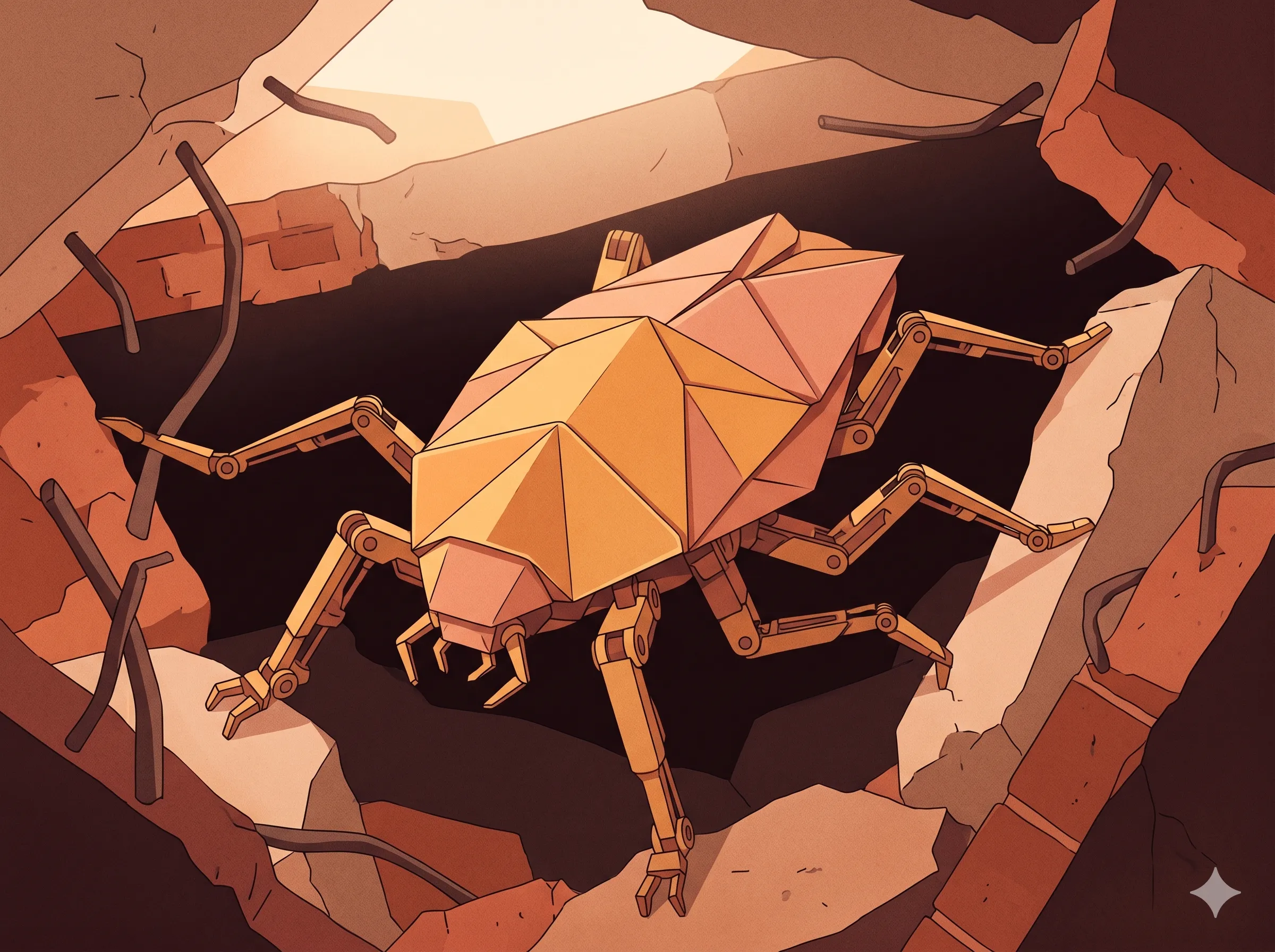
Three hundred million years of evolutionary engineering attracts attention from researchers.
Search-and-rescue robotics. Remember the cockroach compression mechanic from earlier? UC Berkeley and Harvard’s Wyss Institute built a robot around it. It’s called CRAM — the Compressible Robot with Articulated Mechanisms — a 46-gram, palm-sized machine constructed via origami-style folded composite plates. Uncompressed, it stands 75 mm tall. Compressed, 35 mm — a 54% squeeze, matching the cockroach’s biological feat at roughly 20× the cockroach’s body size. It tolerates a 1-kilogram crush load (around 20× its own mass) without damage. The intended application: navigating earthquake rubble and collapsed buildings, where flat machines can reach survivors that wheeled robots can’t.
Antibiotic research. Cockroaches live in sewers and refuse, walking through bacterial colonies that would kill most organisms. The biological response is an unusually large arsenal of antimicrobial peptides (AMPs): the Blattella germanica genome encodes 39 AMP genes across five distinct families (Silva et al., 2020, Scientific Reports) — more than fruit flies or mosquitoes. Specific peptides have been characterised in detail: periplanetasin-4 disrupts fungal mitochondria; blattellicins are a recently-discovered cockroach-specific family with targets still being mapped.
Now for the return of Blattabacterium. In 2024, researchers showed that AMP1 — a peptide produced not by the cockroach itself, but by its internal symbiotic bacterium (yes, the same one from earlier) — drives wound healing in mouse models at efficacy comparable to vancomycin (2024 study in Microbiome). The cockroach’s 150-million-year-old roommate, it turns out, makes antibiotics.
No cockroach-derived antibiotic is in clinical trials yet — the pipeline is roughly 5–10 years behind the better-funded AMP research from honeybees and Lucilia flies. But the molecules are characterised, the mechanisms mapped, and the work is accelerating.
Traditional medicine, validated (with caveats). China has used American cockroach extract in clinical medicine for centuries. The most regulated example is Kang Fu Xin Ye (康复新液) — an ethanol extract of Periplaneta americana, approved by China’s National Medical Products Administration and manufactured by Sichuan Gooddoctor Panxi Pharmaceutical. It’s prescribed for gastrointestinal ulcers and topical wound healing (including diabetic skin ulcers and pressure sores). A 2023 meta-analysis in the International Wound Journal pooled 22 trials covering 1,575 patients and found shorter healing times — though with high heterogeneity and incomplete safety reporting. The active compounds are not fully purified; it’s a complex extract, not a single molecule. The signal is suggestive, not definitive, but real enough to be clinically used.
Key Takeaways
- Ancient survivors: Cockroach ancestors (roachoids) appeared ~310 Mya in the Carboniferous. The modern body plan emerged ~140 Mya in the Cretaceous, by which time dinosaurs were already old hat. Cockroaches outlived them through the K-Pg extinction.
- Termites are cockroaches. Phylogenomics nests termite lineages inside Blattodea — they’re a specialised eusocial branch of the cockroach tree.
- Built for resilience: Spiracle breathing, distributed ganglia, Blattabacterium nitrogen recycling, ~47% body compression with 900× force tolerance — every system is optimised for survival under hostile conditions.
- The radiation myth, corrected: The “10,000 rads” figure is folklore. Real LD50 is ~6,400 rads — significant, but cockroaches are mid-tier among insects. Tardigrades clear 500,000.
- Asian origins, global spread: The “German” cockroach evolved in the Bay of Bengal ~2,100 years ago and spread in five waves driven by Caliphates, colonial trade, steam-era shipping, and 20th-century globalisation. India is the origin, not a destination.
- Inspiring the future: Cockroach biology is now actively shaping search-and-rescue robotics (CRAM) and antimicrobial pharmaceutical research (AMP1, periplanetasin family).
Sources: Garwood & Sutton 2010 — Biology Letters · Evangelista et al. 2019 — Proc. Royal Society B · Jayaram & Full 2016 — PNAS · Tang et al. 2024 — PNAS · Wharton & Wharton 1959 — Radiation Research · Kelleher et al. 2025 — Journal of Heredity · Silva et al. 2020 — Scientific Reports · Wang et al. 2023 — International Wound Journal
Related posts: Types of Cockroaches in Indian Homes · The Chronicles — Episode 1: The Great Kitchen Cleanse