
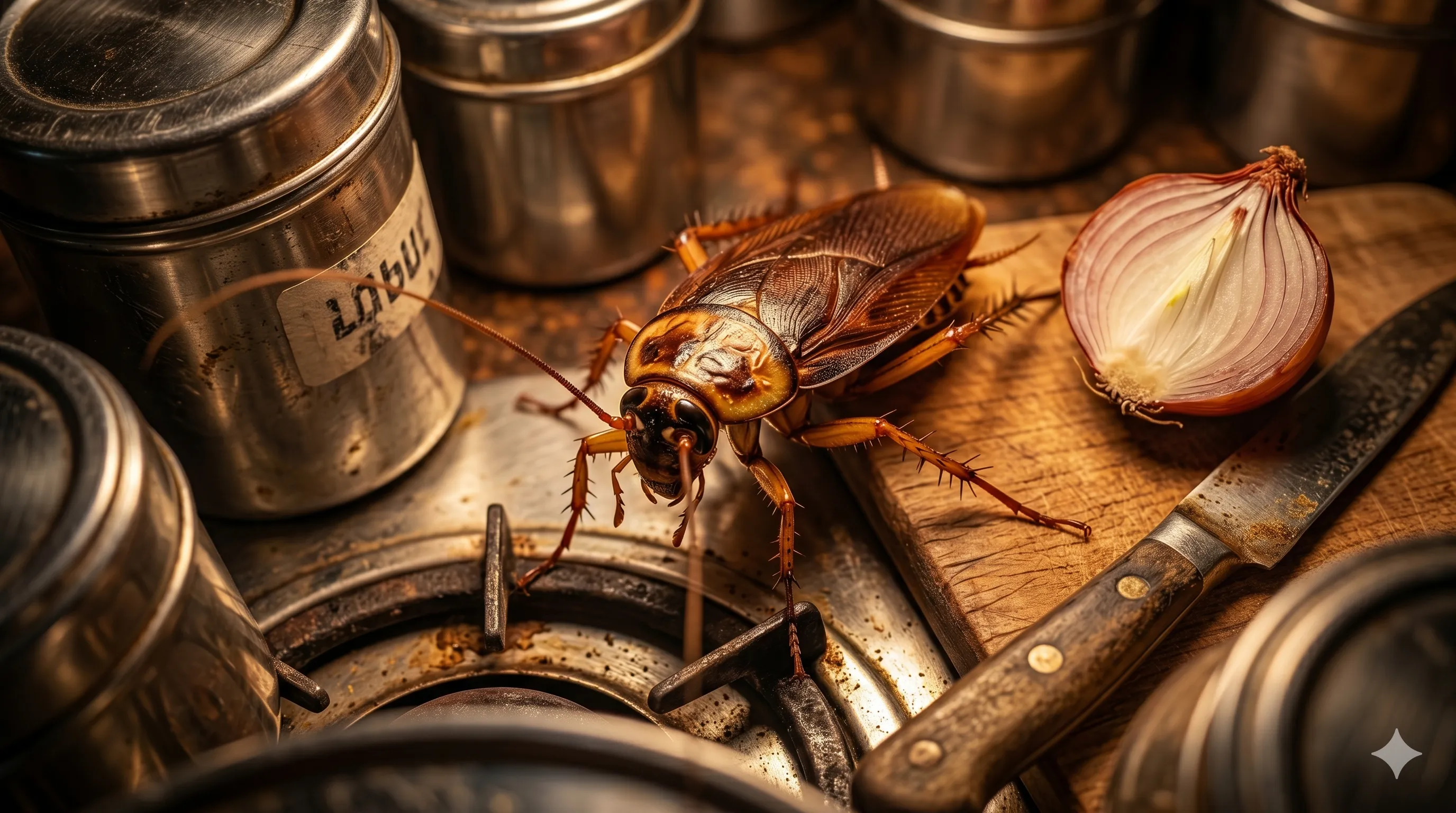
Types of Cockroaches in Indian Homes: Identify the 4 Common Species
A field guide to identifying the 4 cockroach species in Indian homes: German, American, Oriental, Brown-banded — plus health risks and prevention.
Flicking on the kitchen light at midnight and watching a dark shape scatter is a near-universal Indian experience. Our warm, humid climate is paradise for cockroaches — but here’s the catch: not every cockroach in your home is the same species. Knowing which one you’re dealing with changes everything about how you actually get rid of them.
This is the field guide.
First, Three Quick Definitions
- Pronotum: The shield-like plate covering the back of the cockroach’s neck. Most identifying marks live here.
- Ootheca (plural: oothecae): The bean-shaped egg case females produce. Counting these in a hidden corner is a sign of an established infestation.
- Nocturnal: Active at night. If you’re seeing cockroaches during the day, the population is large enough that they’ve run out of hiding spots.
The Four Species You’ll Actually Meet
Out of more than 4,500 cockroach species globally, only a handful are interested in living with humans. In India, you’re almost certainly dealing with one of these four.
1. German Cockroach — Blattella germanica
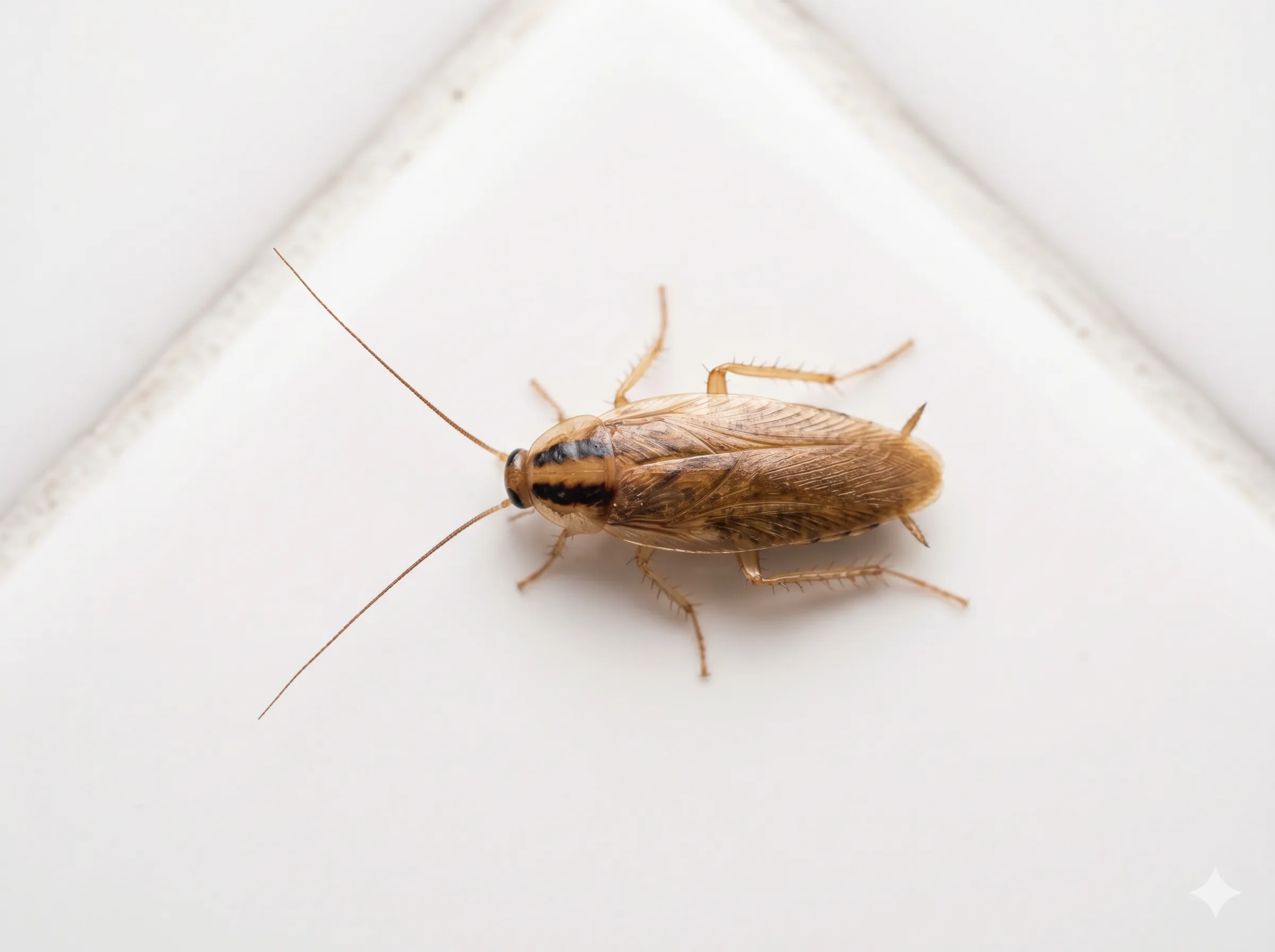
The single most problematic species in Indian apartments. Small (13–16 mm), light brown, with two dark parallel stripes running down the pronotum just behind its head. That’s your ID tip.
- Where: Kitchens and bathrooms. Under sinks, behind fridges, inside food cabinets. Strictly indoor.
- Behaviour: Fast, nocturnal, prefers warm and moist hiding spots.
- Why it’s a nightmare: A single female can produce 6–8 oothecae in her lifetime — each carrying 30–40 eggs. Egg-to-adult takes about 103 days. Math the consequences.
2. American Cockroach — Periplaneta americana
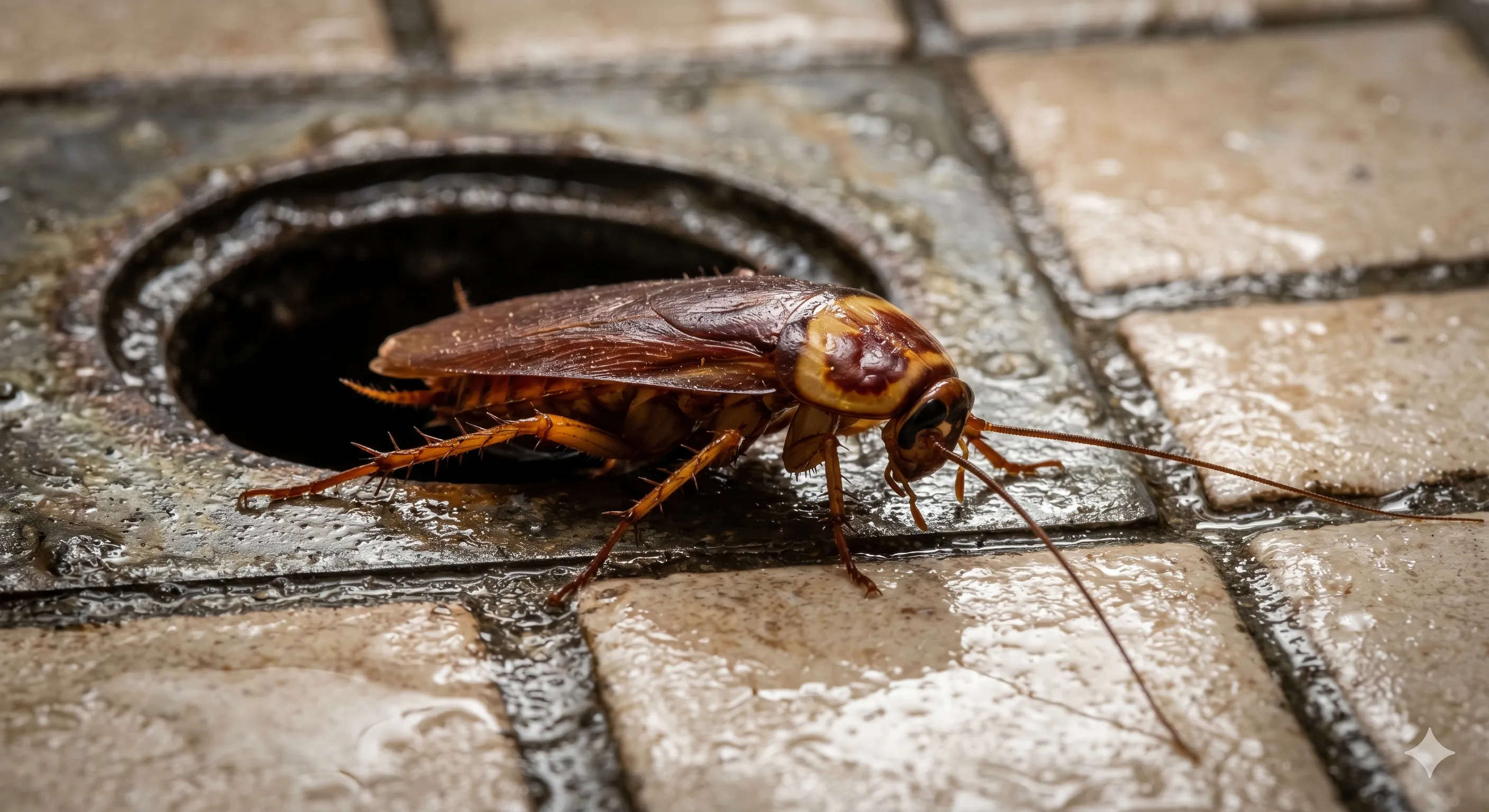
The big one. 35–53 mm, reddish-brown, with a distinctive pale yellow border around the pronotum. Yes, it can fly — short glides, mostly when startled.
- Where: Drains, sewers, basements, pipe chases. This is your “waterbug” coming up the bathroom drain at night.
- Behaviour: Travels long distances between sewers and homes. Outdoor-origin, but happy to invade.
- Lifespan: Adults live 440+ days. Some females clear 588 days. These are old, experienced roaches.
3. Oriental Cockroach — Blatta orientalis
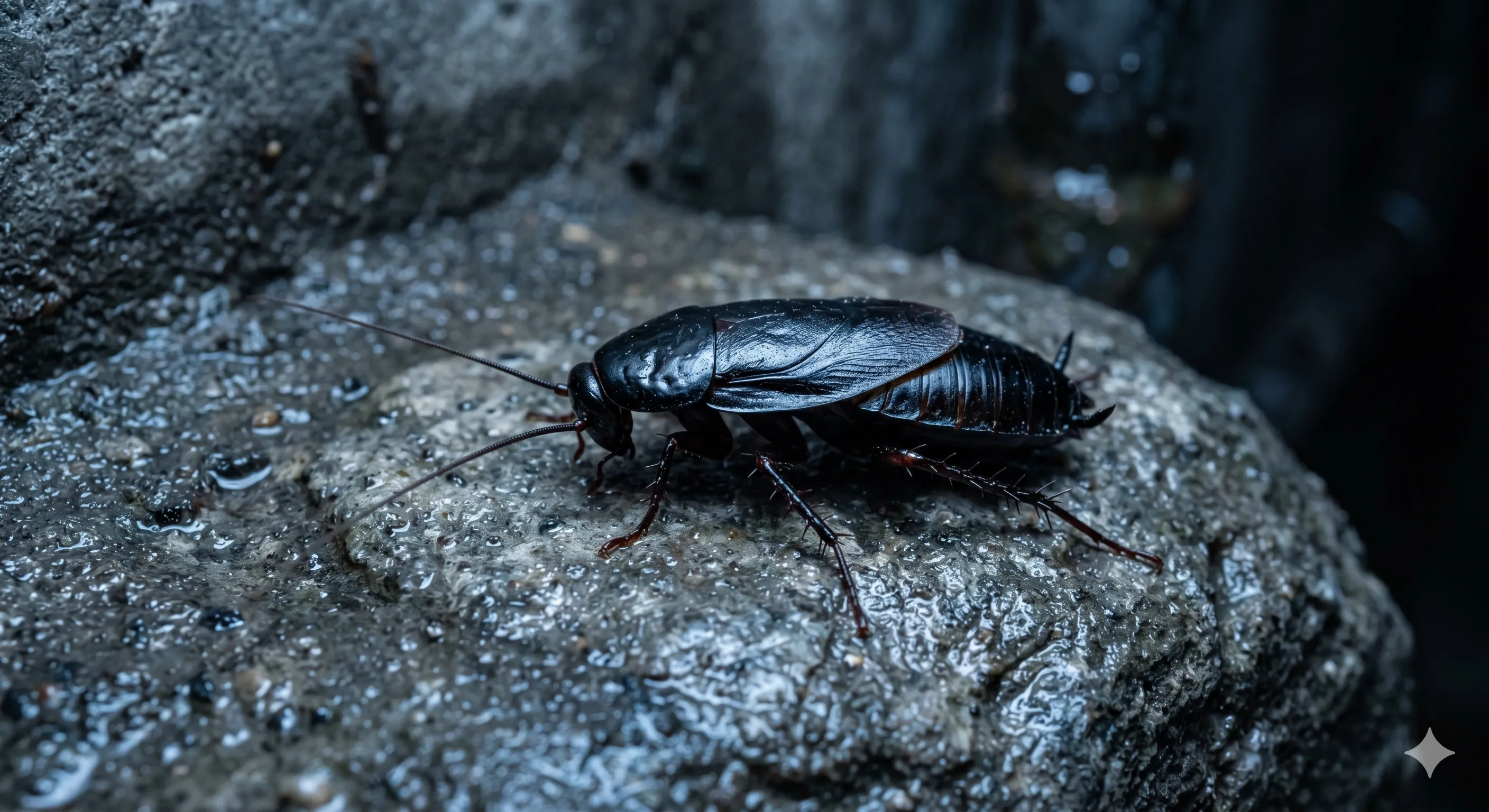
The sluggish, shiny black one. 25–32 mm, dark glossy body, distinctly clumsier than the others. Females look wingless (they have tiny non-functional pads); males have wings covering 75% of the body but rarely fly.
- Where: Damp, cool, dark places — basements, crawlspaces, drains. Common in older buildings.
- Behaviour: Poor climbers. Stays at ground level. Slower than the German or American cockroach, which is sometimes the only thing that betrays them in a kitchen.
- Lifespan: 160–180 days.
4. Brown-banded Cockroach — Supella longipalpa
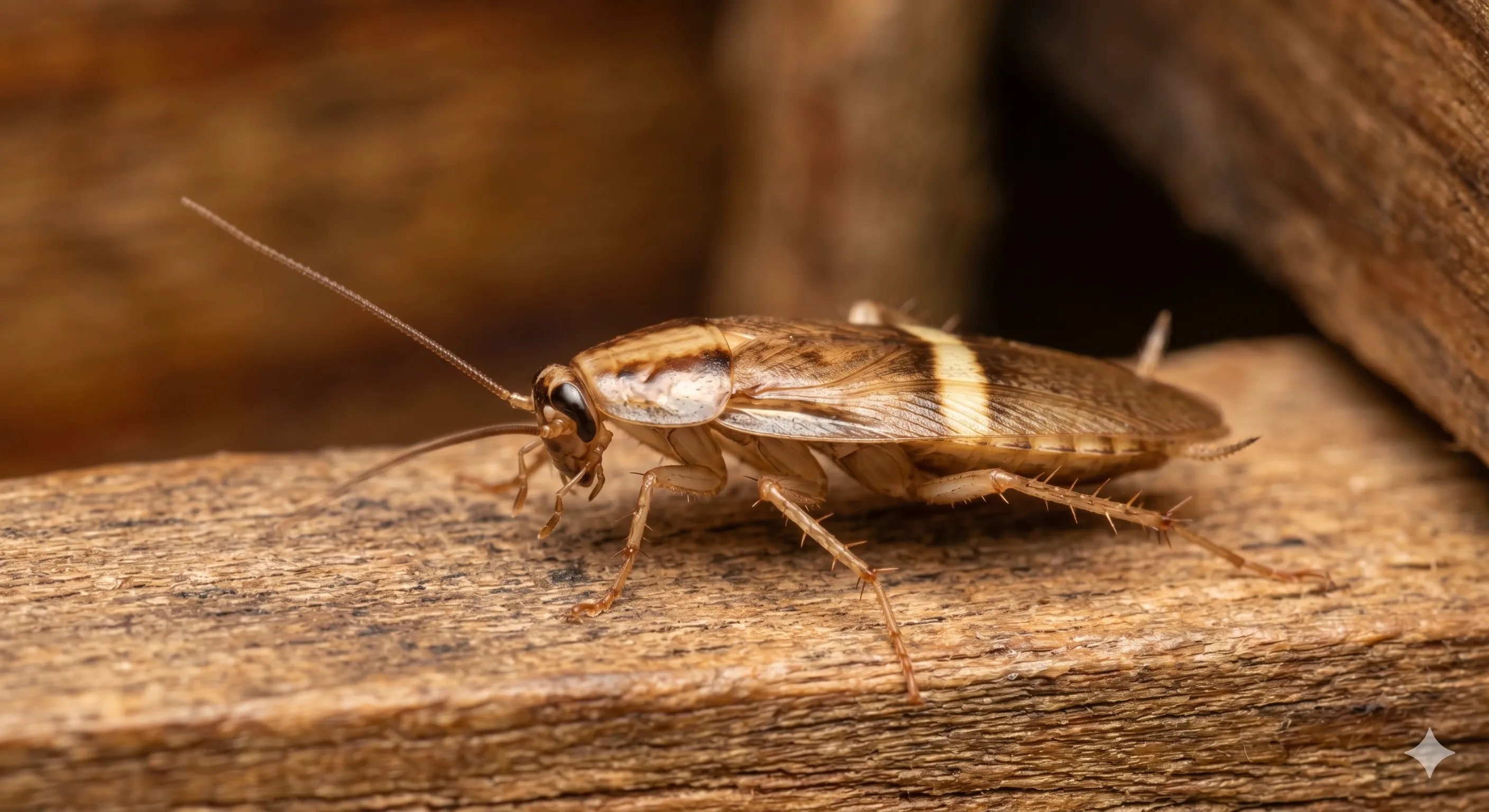
Small (~13 mm), light brown, with two pale horizontal bands running across the wings and abdomen. No dark pronotum stripes (that’s the German), no yellow halo (that’s the American).
- Where: Warm, dry rooms — the opposite of every other species on this list. Bedrooms, living rooms, ceilings, behind picture frames, inside warm electronics like TVs and routers.
- Behaviour: Males fly readily when disturbed. Females glue oothecae to the underside of furniture.
- Why people miss it: It’s not in the kitchen. People look in the wrong rooms.
Quick Comparison Table
| Species | Size | Colour | Where you’ll find it | Quick ID |
|---|---|---|---|---|
| German | 13–16 mm | Light brown | Kitchens, bathrooms | Two dark stripes behind the head |
| American | 35–53 mm | Reddish-brown | Drains, sewers, basements | Large size + pale yellow halo on pronotum |
| Oriental | 25–32 mm | Shiny black | Damp cellars, drains, ground level | Sluggish, jet-black, females look wingless |
| Brown-banded | ~13 mm | Light brown | Bedrooms, electronics, ceilings | Two pale horizontal bands across wings |
Monsoons, Metros, and Why Indian Apartments Are Different

The monsoon spike (June–September). Heavy rain floods Indian sewers and street drains, displacing massive American and Oriental cockroach populations. They climb up out of the plumbing system and into your home looking for drier, higher ground. The tropical humidity and warmth that follows monsoon then triggers rapid breeding cycles in whatever made it indoors.
Drain cockroaches vs. kitchen cockroaches. Two very different problems:
- German + Brown-banded = indoor pests. They live inside your apartment full-time. Killing them outdoors does nothing.
- American + Oriental = drain pests. They live outdoors and migrate in. Sealing drains and gaps matters more than spraying inside.
Why Indian apartments are uniquely vulnerable. Three reasons:
- Shared plumbing. Dense multi-unit buildings let cockroaches migrate freely between flats through common walls, pipe chases, and shared drain lines. Your neighbour’s problem becomes yours.
- Storage culture. Bulk grain, lentils, and spice storage — combined with warm kitchens — is a year-round buffet and incubator.
- Climate. Most of urban India sits in the cockroach sweet spot for humidity and temperature for at least eight months a year.
Metros vs. tier-2. Dense apartment blocks in Mumbai, Delhi, and Bengaluru skew heavily German and American. Smaller towns and rural homes still see plenty of German cockroaches, but also encounter more outdoor wandering species.
Health Risks That Actually Matter
Cockroaches are not a cosmetic problem. They’re a public health one.
Food contamination. Cockroaches scavenge through raw sewage and garbage, then walk across your kitchen counter. They mechanically transfer Salmonella, Shigella, Staphylococcus, Streptococcus, and E. coli. The downstream effects are food poisoning, typhoid, diarrhoea, and dysentery. The WHO’s reference guide on cockroaches documents this exhaustively.
Asthma and allergens. Cockroach faeces, saliva, and shed exoskeletons contain proteins that act as potent indoor allergens. Inhaling these particles can trigger asthma attacks — and the risk is especially high for children in dense Indian apartment complexes, where infestations often persist across multiple units. This is the part most people don’t take seriously enough.
What Actually Works (Prevention)
Skip the bug bombs. Here’s what evidence-based pest control looks like.
- Eliminate water. Dry your sink at night. Fix leaky taps. Cockroaches survive weeks without food but only days without water. This is the single biggest lever you have.
- Eliminate easy food. Store grains, flour, and spices in tight-sealing containers. Don’t leave dishes overnight. Empty the kitchen bin daily.
- Seal entry points. Silicone caulk around plumbing pipes where they enter walls, around windows, and along baseboards. Especially important in shared apartment buildings.
- Use gel baits, not foggers. Aerosol “bug bombs” don’t reach the cracks where cockroaches actually live, and they coat your counters in toxic residue. Modern gel baits — small pea-sized dabs in corners, cabinet hinges, and under sinks — are vastly more effective.
- Treat the building, not just the flat. German cockroaches especially: if neighbours are not coordinating, you’ll keep losing the war. Talk to your housing society.
Key Takeaways
- Four species cover ~95% of Indian household infestations: German, American, Oriental, Brown-banded.
- The ID tip is on the pronotum: stripes (German), yellow halo (American), glossy black (Oriental), pale bands (Brown-banded).
- German cockroaches are the indoor enemy. American cockroaches come from drains. Treat them differently.
- Monsoon (June–September) drives the worst spikes. Seal entry points before the rains hit, not after.
- Cockroaches transmit serious pathogens and trigger childhood asthma. This is a public health problem, not a cosmetic one.
- Gel baits beat foggers. Always.
Sources: WHO — Cockroaches: their biology, distribution and control · National Geographic — American cockroach
Related posts: How Cockroaches Survived 300+ Million Years · The Chronicles — Episode 1: The Great Kitchen Cleanse